

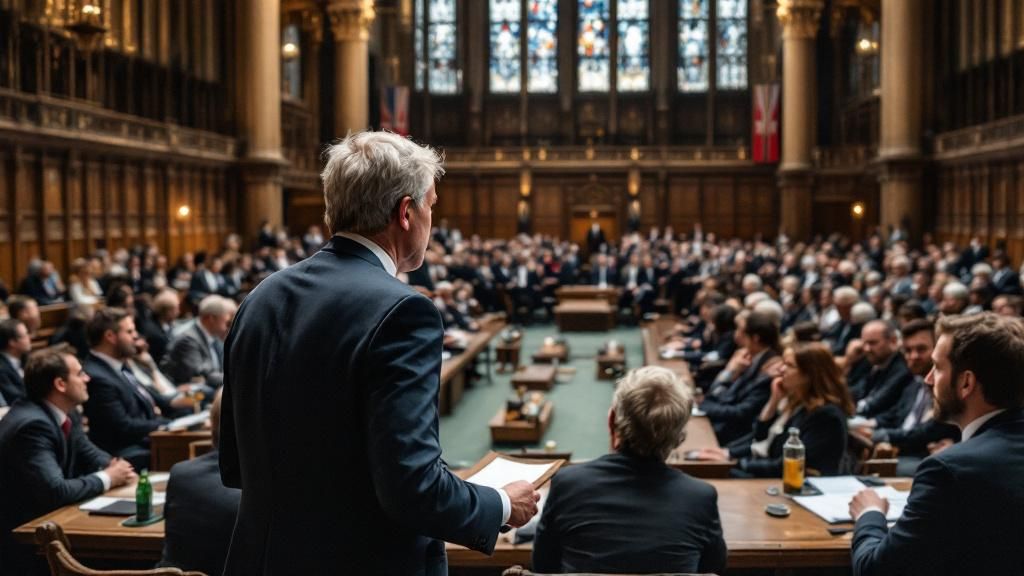
Parliament has descended into intense discussion over proposed changes to the country’s immigration system, with broad agreement across parties proving difficult to achieve. Whilst some MPs advocate for stricter border controls and lower net migration numbers, others warn of possible economic and social impacts. The government’s latest legislative proposals have revealed substantial divisions within the two main parties, as backbenchers raise worries ranging from labour market impacts to social cohesion. This article explores the competing arguments, major stakeholders’ views, and the political implications of this contentious policy battle.
Government Proposed Immigration Policy Framework
The government’s new immigration framework represents a extensive reform of existing border control and visa processing procedures. Ministers have positioned the measures as a pragmatic response to public concerns about net migration figures whilst upholding the UK’s competitiveness in attracting skilled labour and global expertise. The framework includes reforms to points-based systems, sponsorship standards, and settlement routes. Officials contend these measures will offer greater control over migration patterns whilst supporting key sectors dealing with labour shortages, especially healthcare, social care, and technology industries.
The outlined framework has prompted significant parliamentary scrutiny, with MPs querying both its viability and core assumptions. Critics maintain the government has miscalculated implementation costs and potential regulatory pressures on businesses and government agencies. Supporters, conversely, emphasise the need for decisive action on immigration management, pointing to polling data showing widespread concern about rapid demographic change. The framework’s success will be heavily reliant on organisational resources to handle submissions smoothly and maintain standards across the private sector, areas where past policy changes have faced substantial obstacles.
Primary Strategic Goals
The government has recognised five principal objectives within its immigration framework. First, lowering migration numbers to sustainable levels through tighter visa controls and improved security procedures. Second, emphasising skilled migration aligned with identified labour market gaps, particularly in medical services, engineering, and scientific sectors. Third, enhancing community integration by implementing stronger language standards and civic understanding tests for prospective settlers. Fourth, tackling illegal immigration through greater enforcement investment and cross-border cooperation frameworks. Fifth, sustaining Britain’s reputation as a destination for legitimate business investment and scholarly collaboration.
These objectives illustrate the government’s effort to balance conflicting priorities: satisfying backbench MPs pressing for more stringent immigration controls whilst protecting economic interests needing access to international talent. The framework clearly prioritises points-based evaluation over family reunification pathways, fundamentally altering immigration categories. Ministers have emphasised that intended modifications accord with post-Brexit policy autonomy, enabling the United Kingdom to develop distinctive immigration rules separate from European Union precedent. However, implementation of these objectives faces considerable parliamentary opposition, especially concerning settlement restrictions and family visa changes which human rights groups have criticised as excessively punitive.
Execution Roadmap
The government outlines a gradual deployment timeline spanning eighteen months, beginning with legislative passage and regulatory development. Phase one, starting right after royal assent, concentrates on creating new visa processing infrastructure and upskilling immigration officials. Phase two, set for months four through nine, brings in reformed points-based criteria and employer sponsorship modifications. Phase three, finishing the implementation period, deploys enhanced border security technologies and integration requirement enforcement. The government calculates it will need approximately £250 million for system upgrades, increased staffing, and international coordination arrangements, though external experts suggest actual costs might well outstrip government projections.
Timeline feasibility is disputed within Parliament, with opposition parties challenging whether eighteen months provides adequate preparation for such comprehensive changes. The Home Office has in the past encountered significant delays implementing immigration reforms, raising scepticism regarding delivery commitments. Employers’ organisations have cautioned that compressed schedules generate instability for sponsorship applications and workforce planning. Furthermore, parliamentary procedures themselves may extend the legislative process beyond government expectations, particularly if amendments become required following detailed scrutiny. The implementation timeline’s success will ultimately rely upon multi-party collaboration and adequate resource allocation, neither of which currently appears assured given existing political divisions surrounding immigration policy.
Opposing Viewpoints and Reservations
Labour opposition spokespeople have raised substantial objections to the government’s immigration proposals, arguing that tighter restrictions could damage the UK economy and vital public services. Shadow ministers argue that healthcare, social care, and hospitality sectors depend significantly on migrant workers, and cutting immigration levels may worsen existing workforce shortages. Opposition frontbenchers emphasise that the policy does not tackle underlying skills gaps and population pressures facing Britain, instead offering simplistic solutions to complicated structural challenges requiring comprehensive, evidence-based approaches.
Beyond Labour, the Liberal Democrats and Scottish National Party have articulated concerns concerning human rights implications and the treatment of asylum seekers under the proposed framework. These parties argue the legislation falls short of proportionality and sufficient safeguards for at-risk groups. Additionally, several backbench MPs from multiple parties worry about compliance burdens and red tape on businesses. Civil society organisations and immigration charities have similarly warned that the policy fails to properly address integration support and may exclude already vulnerable communities through discriminatory provisions.
Economic and Social Implications
The planned immigration policy adjustments have significant economic ramifications that have generated substantial debate amongst economists and business leaders. More stringent controls could reduce labour shortages in important industries such as healthcare, agriculture, and hospitality, potentially impacting productivity and economic growth. Conversely, supporters maintain that managed migration would reduce pressure on housing markets and public services, ultimately enhancing sustained economic stability and allowing wages to stabilise in less-skilled sectors.
Socially, the policy’s implementation raises significant questions concerning social cohesion and integration. Critics maintain that restrictive measures may create division and weaken Britain’s multicultural identity, whilst proponents argue that regulated immigration enables smoother integration processes and lessens pressure on community services. Both perspectives accept that sound immigration policy requires balancing economic needs with long-term social viability, though debate continues concerning where that balance should be determined.
